Facelift vs. Dermal Fillers
If you’re looking in the mirror thinking it’s time for a lift, you don’t need to turn to surgery. For facial rejuvenation, the decision-making process often boils down to a fundamental choice of a surgical facelift or non-invasive dermal fillers. Both options aim to restore a youthful appearance, but they achieve this through vastly different mechanisms, timelines, and financial commitments. Understanding these nuances is essential for anyone looking to turn back the clock on aging. Youthful Infusion Med Spa explores a facelift vs. dermal fillers. Learn more today.
The Surgical Standard: The Facelift
A rhytidectomy, or facelift, remains the gold standard for correcting significant signs of aging. This surgical procedure involves repositioning underlying muscles and removing excess, sagging skin. It is particularly effective for addressing heavy jowls, deep folds around the mouth, and laxity in the neck area.
The primary advantage of a facelift is its longevity and dramatic impact. While no procedure can stop the aging process entirely, a well-executed facelift can make a patient look ten years younger, with results often lasting a decade or more. However, this comes with a higher price tag, the requirement of general anesthesia, and a recovery period that typically spans several weeks. It is a permanent structural change that requires a significant initial investment of both time and money.
The Non-Invasive Alternative: Dermal Fillers
On the other side of the spectrum are dermal fillers, which have revolutionized the aesthetic industry. These injectable treatments, often composed of hyaluronic acid, work by adding volume to specific areas of the face. They are ideal for filling in hollow temples, enhancing cheekbones, smoothing out nasolabial folds, and plumping the lips.
As noted previously, fillers offer a brief office visit with immediate results. This accessibility is a major draw for professionals who cannot afford the downtime of surgery. Fillers are also reversible and adjustable; if a patient isn’t satisfied with the result, enzymes can often dissolve the product. The drawback, however, is that fillers are temporary. To maintain the look, patients must return for “touch-ups” every six to eighteen months, which can lead to a cumulative cost that may eventually rival surgery.
Which is Right for You?
The choice between a facelift and fillers generally depends on two factors: the degree of skin laxity and your personal goals.
- Age and Skin Quality: Younger patients with mild to moderate volume loss but good skin elasticity are usually better candidates for fillers. Older patients with significant skin sagging will likely find fillers insufficient, as “filling” sagging skin can sometimes lead to an unnatural, over-inflated appearance.
- Downtime and Risk: If you need to be back at work the next day, fillers are the clear winner. If you are looking for a “one and done” solution and are willing to undergo surgery for a more comprehensive transformation, the facelift is superior.
- Budget: Fillers have a low entry cost but high maintenance costs. A facelift has a high upfront cost but requires very little financial maintenance over the following decade.
Contact Youthful Infusion Med Spa
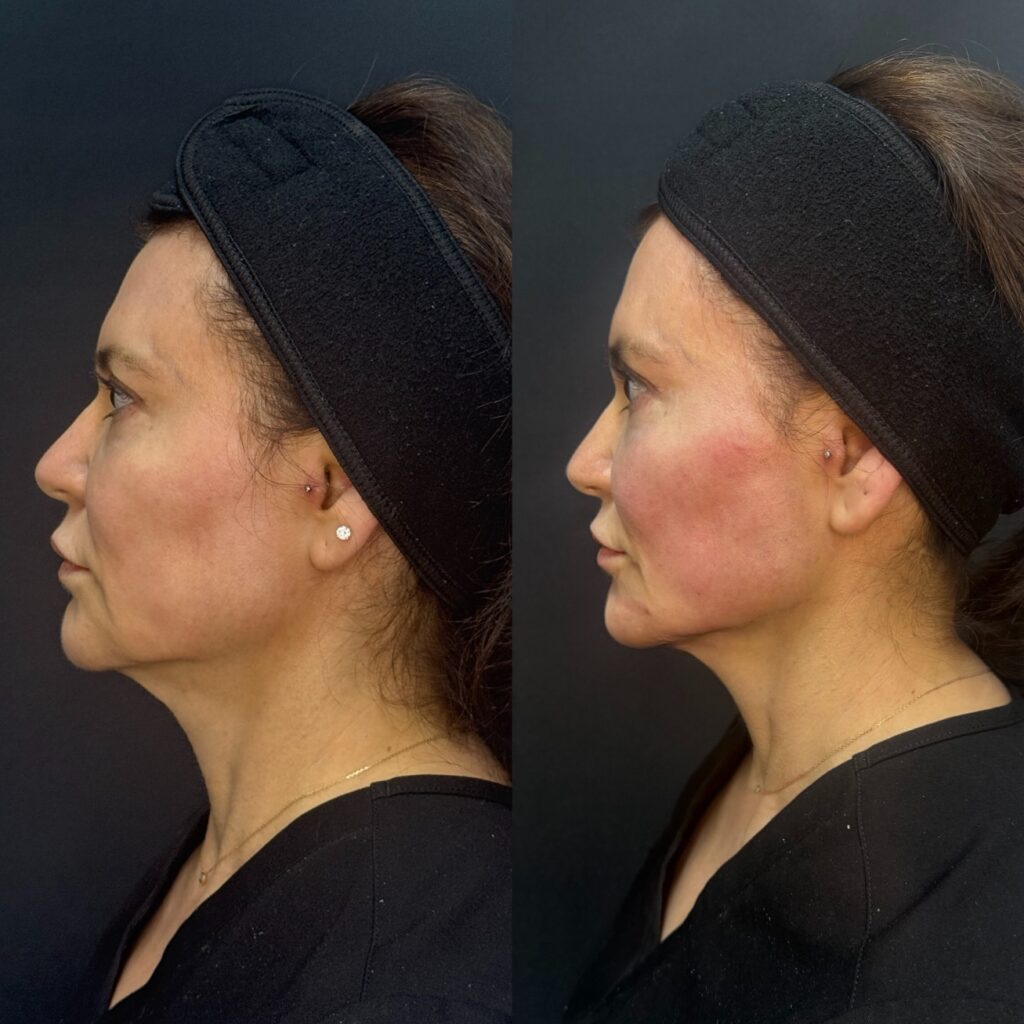
Our team knows this is a significant decision. We customize medical spa treatments to help you get results you love. We can even perform a “liquid facelift” using fillers to delay the need for surgery. Dermal fillers can also be used after a surgical facelift to refine small details and maintain skin radiance. Let us meet with you to devise the perfect customized plan. Reach out today to schedule a consultation.